Today's
EarthStation1.com 15% Off Commemorative Memorial Title: TV
Commercials: The Classics Vol. 8 DVD, MP4 Download, USB Flash
Drive
Today, June 17, 2026
June 17: National Eat Your Vegetables
Day: -- A day that falls in the middle of National Fresh Fruit and
Vegetables Month that makes the day's celebration one more
opportunity to remind everyone to continue with this part of a
healthy diet. Vegetables are an essential part of a healthy
lifestyle. As part of the main meal or as a snack, vegetables can
be enjoyed in a variety of ways. Of course, each vegetable has its
own nutritional content. Generally, they contain a little protein
or fat and varying proportions of vitamins such as Vitamin A,
Vitamin K and Vitamin B6, provitamins, dietary minerals, and
carbohydrates. Interestingly, they also contain a variety of other
phytochemicals, some of which have antioxidant, antibacterial,
antifungal, antiviral and anticarcinogenic properties. In
addition, many vegetables also contain fiber, which is important
for gastrointestinal function. Another benefit is the essential
nutrients that vegetables contain that are necessary for healthy
hair and skin. When eating a diet consisting of the recommended
amounts of fruits and vegetables, it may help lower the risk of
heart diseases and type 2 diabetes. These diets may also help to
decrease bone loss and protect against some cancers. In addition,
the potassium provided may help prevent the formation of kidney
stones. It is recommended by the USDA Dietary Guidelines for
Americans to consume 3 to 5 servings of vegetables per day.
However, this recommendation may vary depending on age and gender.
For example, one serving of vegetables is equivalent of 1/2 to 1
cup and can be eaten either raw or cooked. To observe National Eat
Your Vegetables Day: Make sure you consume your recommended daily
allowance of vegetables; Add veggies to your breakfast. Whether
mixing spinach into your eggs or swapping out that muffin for a
smoothie, you can get at least one serving in the morning; Skip
the candy bar when you're craving a snack. Instead, have some
carrots, kohlrabi, or other fresh veggies to munch on; Another
great snack is veggie chips. They not only reduce calories and
fats, but they taste great, too; Swap out the French fries for a
side salad at lunch or supper. If you're having a baked potato,
choose a sweet potato instead; Use #EatYourVegetablesDay on social
media. On Sale @ 15% Off Discount Till Midnight PT!
https://store.earthstation1.com/tv-commercials-the-classics-vol-8-dv8.html
Today's
EarthStation1.com 15% Off Commemorative Memorial Title: Bill Dana
As Jose Jimenez Comedy Album Megaset MP3 CD, Download, USB
Today, June 17, 2026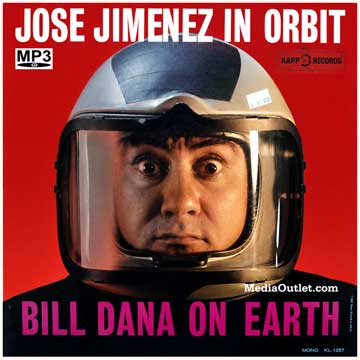
June 17: National Mascot Day: -- A
celebration of the spirit of fun mascots bring to every event. On
any game day, mascots engender enthusiasm and energy. People of
all ages, children and adults alike, enjoy them, and they help
build memories of their favorite team. California is known to be
the home of several of the quirkiest and most whimsical mascots in
the world of sports. The word mascot originates from the French
word 'mascotte,' used to describe things that bring good luck.
Mascots have been around for over 130 years. The term was
popularized in the 18th century when French composer Edmond Audran
wrote the opera "La Mascotte." The work became so
popular that it was translated into English as "The Mascot,"
meaning any animal, person, or object which brings good luck. On
November 11, 1882, according to a sports article in the London
newspaper "The Era," a football match between
Middlesbrough Association and a newly formed team named La
Mascotte took place in which one player dressed up in a costume.
This was most likely the first mascot in the sports world. In the
United States, the first mention of a sports mascot for baseball
was in 1883, when a boy working for the team named Chic earned the
reputation of bringing good luck to the players. Mascots can take
the form of a person, animal, or anything which represents good
luck. Costumed mascots appeared in the mid-20th century, which
allowed teams to choose any creature to become their ambassador.
Nowadays, mascots stir up the fan base, entertain and also
educate. They have filled all American landscapes. Mascots are
also commonly used to represent consumer products, one example
being Ronald McDonald for the fast-food chain McDonald's. Music
bands also use band mascots to promote their music who show up at
live shows or on the album covers. Think Eddie, the Head of the
famous English heavy metal band Iron Maiden. On Sale @ 15% Off
Discount Till Midnight PT!
https://store.earthstation1.com/bill-dana-as-jose-jimenez-comedy-album-megaset-mp3-cd-usb-driv3.html
Today's
EarthStation1.com 15% Off Commemorative Memorial Title: TV
Commercials: The Classics Vol. 3 DVD, Video Download, USB Drive
Today, June 17, 2026
June 17: Global Garbage Man Day: -- A day
to recognize the dedicated efforts of the men and women who keep
our communities clean. We describe the experts who collect the
garbage, recyclables, and castoffs from our homes and
neighborhoods by several names. Whether they are sanitation
specialists or waste management professionals, we appreciate their
arrival on a regularly scheduled basis. The role of waste
management goes far beyond garbage collection. In fact, waste
management provides a variety of services and programs designed to
protect and reduce the impact we have on our environment. Today's
observance also celebrates the great strides the industry and
experts are taking to make a better world for all of us. To
observe Global Garbage Man Day: Thank your garbage men and women;
Take part in your local recycling programs; Learn more about your
community's sanitation needs and find out how the system works;
When you have unusually large amounts of garbage to be picked up,
meet the workers at the curb and give them a hand loading the
items; And use #GarbageManDay to share on social media. John D.
Arwood founded National Garbage Man Day in 2011 to honor the men
and women who work hard in the industry to keep communities safe
and clean. Recognizing efforts around the world, the celebration
became Global Garbage Man Day. On Sale @ 15% Off Discount Till
Midnight PT!
https://store.earthstation1.com/tv-commercials-the-classics-vol-3-dv3.html
Today's
EarthStation1.com 15% Off Commemorative Memorial Title: American
Revolutionary War Documentaries DVD, Download, USB Drive
Today, June 17, 2026
June 17: Bunker Hill Day: -- June 17,
1775: The Age Of Enlightenment (The Enlightenment, The Age Of
Reason): The Age Of Revolution: The Atlantic Revolutions: The
American Enlightenment: The American Revolution: The American
Revolutionary War: The Battle Of Bunker Hill: -- Colonists inflict
heavy casualties on British forces while losing the Battle Of
Bunker Hill, fought during the Siege of Boston in the early stages
of the American Revolutionary War. The battle is named after
Bunker Hill in Charlestown, Massachusetts (the oldest neighborhood
in Boston, originally called Mishawum by the Massachusett
Indians), which was peripherally involved in the battle. It was
the original objective of both the colonial and British troops,
though the majority of combat took place on the adjacent hill
which later became known as Breed's Hill. On June 13, 1775, the
leaders of the colonial forces besieging Boston learned that the
British were planning to send troops out from the city to fortify
the unoccupied hills surrounding the city, which would give them
control of Boston Harbor. In response, 1,200 colonial troops under
the command of William Prescott stealthily occupied Bunker Hill
and Breed's Hill. During the night, the colonists constructed a
strong redoubt on Breed's Hill, as well as smaller fortified lines
across the Charlestown Peninsula. By daybreak of June 17, the
British became aware of the presence of colonial forces on the
Peninsula and mounted an attack against them that day. Two
assaults on the colonial positions were repulsed with significant
British casualties; the third and final attack carried the redoubt
after the defenders ran out of ammunition. The colonists retreated
to Cambridge over Bunker Hill, leaving the British in control of
the Peninsula. The battle was a tactical, though somewhat Pyrrhic
victory for the British, as it proved to be a sobering experience
for them, involving many more casualties than the Americans had
incurred, including a large number of officers. The battle had
demonstrated that inexperienced militia were able to stand up to
regular army troops in battle. Subsequently, the battle
discouraged the British from any further frontal attacks against
well defended front lines. American casualties were comparatively
much fewer, although their losses included General Joseph Warren
and Major Andrew McClary, the final casualty of the battle. The
battle led the British to adopt a more cautious planning and
maneuver execution in future engagements, which was evident in the
subsequent New York and New Jersey campaign, and arguably helped
rather than hindered the American forces. Their new approach to
battle was actually giving the Americans greater opportunity to
retreat if defeat was imminent. The costly engagement also
convinced the British of the need to hire substantial numbers of
foreign mercenaries to bolster their strength in the face of the
new and formidable Continental Army. The Siege of Boston (April
19, 1775 - March 17, 1776) was the opening phase of the American
Revolutionary War. New England militiamen prevented the movement
by land of the British Army garrisoned in what was then the
peninsular city of Boston, Massachusetts. Both sides had to deal
with resource supply and personnel issues over the course of the
siege. British resupply and reinforcement activities were limited
to sea access. After eleven months of the siege, the British
abandoned Boston by sailing to Nova Scotia. The famous order
"Don't fire until you see the whites of their eyes" was
popularized in stories about the Battle Of Bunker Hill. It is
uncertain as to whom among the Colonial officers commanding troops
at the battle said it, since various histories, including
eyewitness accounts, attribute it to Israel Putnam, John Stark,
William Prescott or Richard Gridley, and it may have been said
first by one, and repeated by the others. It was also not an
original statement. The idea dates originally to the general-king
Gustavus Adolphus (1594-1632) who gave standing orders to his
musketeers: "never to give fire, till they could see their
own image in the pupil of their enemy's eye". Gustavus
Adolphus's military teachings were widely admired and imitated and
caused this saying to be often repeated. Whether or not it was
actually said in this battle, it was clear that the colonial
military leadership were regularly reminding their troops to hold
their fire until the moment when it would have the greatest
effect, especially in situations where their ammunition would be
limited. On Sale @ 15% Off Discount Till Midnight PT!
https://store.earthstation1.com/american-revolutionary-war-dvd-documentaries.html
Today's
EarthStation1.com 15% Off Commemorative Memorial Title: The
Longest Hatred: Antisemitism & Jewish Persecution DVD, MP4,
USB
Today, June 17, 2026
June 17, 1244: Discrimination: Jewish
History: France: The History Of France: Antisemitism: Book
Burnings: The Disputation Of Paris (Hebrew: Mishpat Pariz; French:
Disputation de Paris) (The Trial Of The Talmud (French: Proces du
Talmud)): -- Having found the Talmudic sages responsible for
writing the Talmud guilty of 35 charges of allegedly blasphemous
passages about Jesus, Mary and Christianity, such as supposedly
permitting Jews to kill non-Jews, to deceive Christians, and to
break promises made to them without scruples, a tribunal
consisting of Queen Of France Blanche Of Castile, Archbishop
Gauthier Le Cornu of Sens, Bishop Guillaume d'Auvergne of Paris,
Inquisitor Henri de Cologne, Chancellor of the University of Paris
Eudes de Chateauroux, and the Christian tribunal's prosecutor,
Nicholas Donin, a Franciscan convert from Judaism who pressed for
this trial upon Pope Gregory IX and King Louis IX Of France, set
in motion a set of events four days following the debate/trial
that result in an estimated twenty-four carriage loads of some
10,000 volumes of Jewish religious manuscripts being burnt in the
streets Paris, a crime of staggering historic proportions made
even more despicible by the fact that because the printing press
did not yet exist, all these copies were hand-written, and were
therefore irreplaceable. The Disputation Of Paris was cast
ostensibly as debate, as part of the Catholic Church's misguided
and mendacious evangelistic efforts to win the beliefs of the Jews
through debate; it was in fact actually constitued as a trial,
held on June 12, 1240. Four of the most distinguished rabbis of
France - Rabbis Yechiel of Paris, Moses of Coucy, Judah of Melun,
and Samuel ben Solomon of Chateau-Thierry - represented the Jewish
side of the debate. On Sale @ 15% Off Discount Till Midnight PT!
https://store.earthstation1.com/the-longest-hatred-antisemitism-amp-jewish-persecution-dvd-mp3-us3.html
Today's
EarthStation1.com 15% Off Commemorative Memorial Title: In Search
Of Dracula 1975 Christopher Lee DVD, MP4 Download, USB Drive
Today, June 17, 2026
June 17, 1462: The Ottoman Wars In
Europe: Mehmed II's Campaigns: The Ottoman-Wallachian Wars: The
Night Attack At Targoviste: (Romanian: Atacul De Noapte De La
Targoviste): -- Vlad III, also known as Vlad the Impaler (Vlad
Tepes) or Vlad Dracula, the inspiration for the fictional
character of Count Dracula, attempts to assassinate Mehmed II
forcing him to retreat from Wallachia. The Night Attack At
Targoviste was a battle fought between forces of Vlad III the
Impaler of Wallachia and Mehmed II of the Ottoman Empire on
Thursday, June 17, 1462. The conflict initially started with
Vlad's refusal to pay the jizya (tax on non-Muslims) to the Sultan
and intensified when Vlad Tepes invaded Bulgaria and impaled over
23,000 Turks. Mehmed then raised a great army with the objective
to conquer Wallachia and annex it to his empire. The two leaders
fought a series of skirmishes, the most notable one being the
Night Attack where Vlad Tepes attacked the Turkish camp in the
night in an attempt to kill Mehmed. The assassination attempt
failed, and Mehmed marched to the Wallachian capital of
Targoviste, where he discovered an additional 20,000 impaled
Turks. The Sultan and his troops then sailed to Braila and burned
it to the ground before retreating to Adrianople. Both sides would
claim victory, while Mehmed II's forces returned home with many
captured slaves, horses and cattle. On Sale @ 15% Off Discount
Till Midnight PT!
https://store.earthstation1.com/in-search-of-dracula-1975-documentary-starring-christopher1975.html
Today's
EarthStation1.com 15% Off Commemorative Memorial Title: Pirates 12
Part Documentary Series MP4 Video Download DVD
Today, June 17, 2026
June 17, 1579: The Exploration Of North
America: The English Exploration Of North America: English
Colonization Of The Americas: The History Of California: New
Albion (Nova Albion): -- Sir Francis Drake claims a land he calls
Nova Albion (Latin: "New Albion" (New England)), known
today as California, for England. This claim became the
justification for English charters across America to the Atlantic
coast and soon influenced further national expansion projects on
the continent. Drake's landing site has been identified as Drake's
Cove, which is part of Point Reyes National Seashore. Drake, after
successfully sacking Spanish towns and plundering Spanish ships
along their eastern Pacific coast colonies, sought safe harbour to
prepare his ship, The Golden Hind, for circumnavigation back to
England. He found it on June 17, 1579, when he and his crew landed
on the Pacific coast at Drakes Bay in Northern California. While
encamped there, he had friendly relations with the Coast Miwok
people who inhabited the area near his landing. Naming the area
Nova Albion, or New Albion, he claimed sovereignty of the area for
Queen Elizabeth I, an act which would have significant long-term
historical consequences. Sailing away on July 23, and leaving
behind no colony, Drake eventually circumnavigated the globe and
returned to England in September 1580. Over the years, numerous
speculative sites along the North American Pacific coast were
investigated as the area of Drake's New Albion claim. Through the
following centuries, various cartographers and mariners identified
the area near Point Reyes as Drake's likely landing place. In the
20th and 21st centuries, definitive evidence was gathered,
particularly regarding Drake's contact with the Coast Miwok people
and porcelain shards which were established to be remnants of
Drake's cargo. The various avenues of research led to a National
Historic Landmark designation by the United States Department of
the Interior in October 2012 and a California Historical Landmark
designation by California State Parks in October 2021. On Sale @
15% Off Discount Till Midnight PT!
https://store.earthstation1.com/pirates-12-part-documentary-series-mp4-video-download-124.html
Today's
EarthStation1.com 15% Off Commemorative Memorial Title: The French
Revolution Series + Irish Rebellion & You Are There MP4 DVD
Today, June 17, 2026
June 17, 1789: The Age Of Enlightenment
(The Enlightenment, The Age Of Reason): The Age Of Revolution: The
Atlantic Revolutions: The Ancien Regime (French: The Old Regime):
The Estates Of The Realm (The Three Estates): The Third Estate
(Commoners): The French Revolution: The National Assembly (French:
Assemblee Nationale): -- The Third Estate of France declares
itself the National Assembly. The estates of the realm, or three
estates, were the broad orders of social hierarchy used in
Christendom (Christian Europe) from the medieval period to early
modern Europe. Different systems for dividing society members into
estates developed and evolved over time. The First Estate
comprised the entire clergy. The Second Estate was the French
nobility. The Third Estate comprised all of those who were not
members of the above and can be divided into two groups, urban and
rural, together making up 98% of France's population.The urban
included wage-labourers. The rural included free peasants (who
owned their own land) who could be prosperous and villeins (serfs,
or peasants working on a noble's land). The free peasants paid
disproportionately high taxes compared to the other Estates and
were unhappy because they wanted more rights. In addition, the
First and Second Estates relied on the labour of the Third, which
made the latter's unequal status all the more glaring. During the
French Revolution, the National Assembly (French: Assemblee
Nationale), which existed from June 13, 1789 to July 9, 1789, was
a revolutionary assembly formed by the representatives of the
Third Estate (businessman peasants etc.) of the Estates-General;
thereafter (until replaced by the Legislative Assembly on Sept.
30, 1791) it was known as the National Constituent Assembly
(French: Assemblee nationale constituante), though popularly the
shorter form persisted. The Estates General was a general assembly
representing the French estates of the realm: the clergy (First
Estate), the nobility (Second Estate), and the commoners (Third
Estate). Summoned by King Louis XVI, it was brought to an end when
the Third Estate formed into a National Assembly, inviting the
other two to join, against the wishes of the King. This signals
the outbreak of the French Revolution. On Sale @ 15% Off Discount
Till Midnight PT!
https://store.earthstation1.com/the-french-revolution-dvd-3-part-tv-documentary-serie3.html
Today's
EarthStation1.com 15% Off Commemorative Memorial Title: Women's
Rights Women's Suffrage The Women's Movement MP4 Download DVD
Today, June 17, 2026
June 17, 1873: Feminism: The Feminist
Movement (The Women's Movement): Women's Suffrage In The United
States: The Trial Of Susan B. Anthony: -- Having been arrested and
fined 100 USD on June 6, 1972 for voting in the United States
presidential election of 1872, The Trial Of Susan B. Anthony
(United States v. Susan B. Anthony) begins, and is closely
followed by the national press. Following a rule of common law at
that time which prevented criminal defendants in federal courts
from testifying, Hunt refused to allow pioneering feminist Susan
B. Anthony to speak until the verdict had been delivered. On June
18, 1873, the second day of the trial, after both sides had
presented their cases, Justice Ward Hunt delivered his lengthy
opinion, which he had put in writing, and in the most
controversial aspect of the trial, Hunt directed the jury to
deliver a guilty verdict. Having received the verdict he ordered,
he ordered the 100 USD fine to be paid. On the third day of the
trial, Hunt asked Anthony if she had anything to say. She
responded with "the most famous speech in the history of the
agitation for woman suffrage", according to Ann D. Gordon, a
historian of the women's movement. Repeatedly ignoring the judge's
order to stop talking and sit down, she protested what she called
"this high-handed outrage upon my citizen's rights",
saying, "you have trampled under foot every vital principle
of our government. My natural rights, my civil rights, my
political rights, my judicial rights, are all alike ignored."
She castigated Justice Hunt for denying her a trial by jury, but
said that even if he had allowed the jury to discuss the case, she
still would have been denied a trial by a jury of her peers
because women were not allowed to be jurors. When Justice Hunt
sentenced Anthony to pay a fine of 100 USD, she responded, "I
shall never pay a dollar of your unjust penalty", and she
never did. If Hunt had ordered her to be jailed until she paid the
fine, Anthony could have taken her case to the Supreme Court. Hunt
instead announced he would not order her taken into custody,
closing off that legal avenue. The U.S. Supreme Court in 1875 put
an end to the strategy of trying to achieve women's suffrage
through the court system when it ruled in Minor v. Happersett that
"the Constitution of the United States does not confer the
right of suffrage upon anyone". The NWSA decided to pursue
the far more difficult strategy of campaigning for a
constitutional amendment to achieve voting rights for women. On
Sale @ 15% Off Discount Till Midnight PT!
https://store.earthstation1.com/women39s-suffrage-amp-the-women39s-movement-dvd-mp4-usb-39394.html
Today's
EarthStation1.com 15% Off Commemorative Memorial Title: The Ballet
Russe: The Paris Opera Ballet Serge Diaghilev DVD MP4 USB
Today, June 17, 2026
June 17, 1882: #BOTD: #HBD! Igor
Stravinsky, Russian-born composer, pianist, and conductor, widely
considered one of the most important and influential composers of
the 20th century (d. April 6, 1971) is #born Igor Fyodorovich
Stravinsky in the town of Oranienbaum on the southern coast of the
Gulf of Finland, 25 mi (40 km) west of Saint Petersburg.
Stravinsky's compositional career was notable for its stylistic
diversity. He first achieved international fame with three ballets
commissioned by the impresario Serge Diaghilev and first performed
in Paris by Diaghilev's Ballets Russes: The Firebird (1910),
Petrushka (1911), and The Rite of Spring (1913). The last of these
transformed the way in which subsequent composers thought about
rhythmic structure and was largely responsible for Stravinsky's
enduring reputation as a musical revolutionary who pushed the
boundaries of musical design. His "Russian phase" which
continued with works such as Renard, the Soldier's Tale and Les
Noces, was followed in the 1920s by a period in which he turned to
neoclassical music. The works from this period tended to make use
of traditional musical forms (concerto grosso, fugue and
symphony), drawing on earlier styles, especially from the 18th
century. In the 1950s, Stravinsky adopted serial procedures. His
compositions of this period shared traits with examples of his
earlier output: rhythmic energy, the construction of extended
melodic ideas out of a few two- or three-note cells and clarity of
form, and of instrumentation. Igor Stravinsky died at 5:20 a.m. in
New York City at the age of 88. The cause on his death certificate
is heart failure. A funeral service was held three days later at
Frank E. Campbell Funeral Chapel. As per his wishes, he was buried
in the Russian corner of the cemetery island of San Michele in
Venice, several yards from the tomb of Sergei Diaghilev, having
been brought there by gondola after a service at Santi Giovanni e
Paolo led by Cherubin Malissianos, Archimandrite of the Greek
Orthodox Church. During the service, his Requiem Canticles and
organ music by Andrea Gabrieli were performed. On Sale @ 15% Off
Discount Till Midnight PT!
https://store.earthstation1.com/the-ballet-russe-a-la-the-paris-opera-ballet-dvd-serge-diaghilev.html
Today's
EarthStation1.com 15% Off Commemorative Memorial Title: Statue Of
Liberty Films Collection DVD, Video Download, USB Drive
Today, June 17, 2026
June 17, 1885: National Personifications:
National Personifications Of The United States: National
Monuments: National Monuments Of The United States: The Statue Of
Liberty (Liberty Enlightening The World) (French: La Liberte
Eclairant Le Monde): -- The Statue Of Liberty arrives in New York
Harbor. The statue was a gift from the people of France
commemorating the French-American alliance during the American
Revolutionary War. Designed by French sculptor Frederic Auguste
Bartholdi (who named it Liberty Enlightening The World) and built
by Gustave Eiffel (best known for the world-famous Eiffel Tower),
the entire structure stands 300 feet (92.9 meters) tall. The
Statue Of Liberty is a figure of a robed woman representing
Libertas, a Roman liberty goddess. She holds a torch above her
head with her right hand, and in her left hand carries a tabula
ansata inscribed in Roman numerals with "JULY IV MDCCLXXVI"
(July 4, 1776), the date of the U.S. Declaration Of Independence.
A broken chain lies at her feet. The statue became an icon of
freedom and of the United States, and was a welcoming sight to
immigrants arriving from abroad. The pedestal contains the words:
"Give me your tired, your poor, your huddled masses yearning
to breathe free, the wretched refuse of your teeming shore. Send
these, the homeless, tempest-tost to me, I lift my lamp beside the
golden door!". The first ticker tape parade takes place in
New York City when office workers spontaneously throw ticker tape
into the streets as the statue is dedicated. On Sale @ 15% Off
Discount Till Midnight PT!
https://store.earthstation1.com/statue-of-liberty-dvd-historical-films.html
Today's
EarthStation1.com 15% Off Commemorative Memorial Title: Hitler's
Henchmen: The Leaders Of Nazi Germany DVD, MP4, USB Drive
Today, June 17, 2026
June 17, 1900: #BOTD: Martin Bormann,
prominent official in Nazi Germany as head of the Nazi Party
Chancellery (d. May 2, 1945) is #born Martin Ludwig Bormann in
Wegeleben (now in Saxony-Anhalt) in the Kingdom Of Prussia in the
German Empire. He gained immense power by using his position as
Adolf Hitler's private secretary to control the flow of
information and access to Hitler. He succeeded Hitler as Party
Minister of the National Socialist German Workers' Party after
Hitler's suicide on 30 April 1945. Bormann joined a paramilitary
Freikorps organisation in 1922 while working as manager of a large
estate. He served nearly a year in prison as an accomplice to his
friend Rudolf Hoess (later commandant of Auschwitz concentration
camp) in the murder of Walther Kadow, a German school teacher who
was a member of the rightwing German Volkisch Freedom Party, and
was suspected of having betrayed German nationalist Albert Leo
Schlageter to the French occupation authorities in the Ruhr.
Bormann joined the Nazi Party in 1927 and the Schutzstaffel (SS)
in 1937. He initially worked in the party's insurance service, and
transferred in July 1933 to the office of Deputy Fuehrer Rudolf
Hess, where he served as Chief Of Staff. Bormann used his position
to create an extensive bureaucracy and involve himself as much as
possible in the decision making. He gained acceptance into
Hitler's inner circle, and accompanied him everywhere, providing
briefings and summaries of events and requests. He began acting as
Hitler's personal secretary on 12 August 1935. Bormann assumed
Hess' former duties, with the title of Head of the Parteikanzlei
(Party Chancellery), after Hess' solo flight to Britain on 10 May
1941 to seek peace negotiations with the British government. He
had final approval over civil service appointments, reviewed and
approved legislation, and by 1943 had de facto control over all
domestic matters. Bormann was one of the leading proponents of the
ongoing persecution of the Christian churches and favoured harsh
treatment of Jews and Slavs in the areas conquered by Germany
during World War II. Bormann returned with Hitler to the
Fuehrerbunker in Berlin on 16 January 1945 as the Red Army
approached the city. After Hitler committed suicide, Bormann and
others attempted to flee Berlin on 2 May to avoid capture by the
Soviets. What happened next remains controversial. Bormann may
either have committed suicide or been killed by advancing Red Army
forces on or near an unnamed bridge near Lehrter station, the main
train station in Berlin. The body was reported to have been buried
nearby on 8 May 1945, according to a 1963 account by a retired
postal worker named Albert Krumnow, but the body was not found
until 1972. It was confirmed as Bormann's body in 1972 based on
the accounts of those involved with the burial, relying on their
memory of events two decades previous, and the identification was
reaffirmed in 1998 by DNA tests, the science of which is not in
doubt, but the results may not have been honestly reported, as was
the case of the DNA tests of the supposed remains of Adolf Hitler.
According to CBS journalist Paul Manning, during his research for
his book Martin Bormann: Nazi in Exile, he found that Martin
Bormann had in 1967 cashed a check at Manufacturers Hanover and
Chase Manhattan Bank that was cleared through Deutsche Bank in
Buenos Aires in Argentina, and had been cashed over his own
signature. Whatever may be true, Bormann was tried in absentia by
the International Military Tribunal in the Nuremberg trials of
1945 and 1946. He was convicted of war crimes and crimes against
humanity and sentenced to death by hanging. His remains were
cremated, and the ashes were scattered in the Baltic Sea. On Sale
@ 15% Off Discount Till Midnight PT!
https://store.earthstation1.com/hitler39s-henchmen-the-leaders-of-nazi-germany-dvd-mp4-394.html
Today's
EarthStation1.com 15% Off Commemorative Memorial Title: Search For
Battleship Bismarck w/ Robert Ballard DVD, MP4, USB Drive
Today, June 17, 2026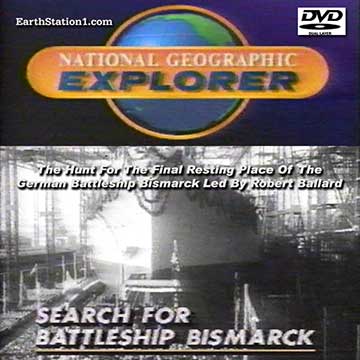
June 17, 1919: #BOTD: #HBD! John Moffat,
Scottish lieutenant and pilot of the Royal Navy Fleet Air Arm,
widely credited with the torpedo strike from his Fairey Swordfish
seaplane launched from the British Aircraft Carrier Ark Royal that
fatally crippled the German battleship Bismarck (d. December 11
2016) is #born John William Charlton Moffat in the village of
Swinton in the county of Scottish Borders, Scotland Moffat took
part in the courageous strike on the German battleship Bismarck
during its Atlantic sortie, codenamed Operation Rheinubung, on May
26, 1941 whilst flying a Fairey Swordfish biplane. On May 24,
1941, the German battleship Bismarck sank the Royal Navy's
flagship HMS Hood, and damaged out of action HMS Prince Of Wales.
The torpedo-bomber carrier HMS Ark Royal received an order, as
part of Force H, to hunt down Bismarck and sink it. On May 26,
1941 Bismarck was running for the safety of the French port of
Brest to make repairs to light damage that she had received from
the clash with Prince Of Wales, and a last-ditch attempt to slow
it down with an airborne torpedo attack from Ark Royal's aircraft
was ordered that night so that the pursuing Royal Navy's heavy
ships could catch up with her. In evening twilight at 9.05 P.M.,
amid gale force winds, Moffat and his observer, T/S-Lt.(A) J. D.
"Dusty" Miller, and telegraphist/air gunner (TAG) LA A.
J. Hayman, flying in the Fairey Swordfish 5C/L9726 together with
14 other Swordfish attacked Bismarck amidst a torrent of
anti-aircraft fire being put up by the ship's guns. Two torpedoes
struck home, one amidships on its port side resulting in slow
flooding, and the second in the steering area. Her rudders were
consequently jammed in a turning position, and although she was
still underway at good speed, she was directionless in the water.
Attempts to steer by varying the speed of the three propellers
failed. With Bismarck's steering control jammed the Royal Navy's
Force H and its Home Fleet were able to catch up with it, surround
it and subject it to extensive shelling and torpedoing, after
which it turned over and sank the following morning. The wreck of
the Bismarck was discovered in 1989. At the time of the attack no
definitive statement of whose torpedo had hit the Bismarck was
released, however following the observation of this wreck
historian Mike Rossiter credited John Moffat as by far the most
likely, through analysis of the flight paths. However, the son of
another Swordfish pilot that attacked the Bismarck, Kenneth
Pattisson, believes that it was his father that damaged the ship
Moffat left the Navy in 1946 and returned to Glasgow. He went to
college in Glasgow to get a business degree and also achieved a
diploma in hotel management. Moffat had stopped flying after
leaving the Navy. In his 60s, after 40 years, he began flying
again. He celebrated his 90th birthday in June 2009 by performing
aerobatics in a light aircraft. In 2010, his book I Sank the
Bismarck, co-written with documentary writer Mike Rossiter, was
released. He died in Perth, Scotland at the age of 97. His burial
details are not publicly available. On Sale @ 15% Off Discount
Till Midnight PT!
https://store.earthstation1.com/search-for-battleship-bismarck-robert-ballard-dvd-mp4-usb-driv4.html
Today's
EarthStation1.com 15% Off Commemorative Memorial Title: Wonderama
TV Kid Show Series Sonny Fox Bob McAllister DVD, MP4, USB
Today, June 17, 2026
June 17, 1925: #BOTD: #HBD! Sonny Fox,
American television host, executive and broadcasting consultant,
first host of The 64K USD Challenge, fourth full-time host of the
children's television program, Wonderama (d. January 24, 2021) is
#born Irwin Fox to a Jewish family in the Parkville section of
Brooklyn, New York. Irwin "Sonny" Fox attended James
Madison High School, in the Midwood/Madison section of Brooklyn,
New York. He grew up in a traditional Jewish family. Fox is a
World War II veteran and, as a POW of the Germans, witnessed the
heroism of Master Sergeant Roddie Edmonds who saved Fox's life by
saying, "We're all Jews" when the Nazi officers demanded
that all Jewish POWs be pointed out. Fox's first experience in
children's programming came in 1954, with a St. Louis program, The
Finder on KETC-TV, a children's news and travelogue program. His
first national exposure came when CBS brought him aboard in 1955.
For three years he co-hosted the children's travelogue, Let's Take
a Trip. Fox became the first host of The 64K USD Challenge, the
game show spinoff of The 64K USD Question, in 1956. In his first
appearance he was called "Bill Fox," presumably because
"Sonny" did not seem professional enough, but by the
second program he became "Sonny Fox" because the name
"Bill Fox" had been registered by another entertainment
personality. Fox was fired a few weeks into the series and
replaced by Ralph Story, in part because, as Fox himself admitted
later, he was so awkward he "had a predilection for asking
the answers." Fox's brief tenure on the show may have been
the biggest break of his career. He escaped any taint from the
coming quiz show scandal. By that time, Fox's involvement in game
shows went no farther than occasionally filling in for the
original host of The Price Is Right, Bill Cullen, or Beat the
Clock host Bud Collyer. It turned out that the job for which he
was suited best came the year the quiz scandals accelerated.
Independent television network Metromedia (born from the former
DuMont Network) hired Fox to host Wonderama on its New York
flagship station, WABD (soon to become WNEW-TV), succeeding the
team of Bill Britten and Doris Faye. Hiring Fox ended what some
called the "musical-hosts syndrome" that Wonderama had
for its first few years. The show had been created as well as
originally hosted by actor-comedian Sandy Becker, who became a New
York children's program star in his own right. Fox became
Wonderama's sole host for eight years, from 1959 until August
1967. Suave, witty, and congenial, Fox juggled the slapstick and
the serious, turning the marathon Wonderama (during Fox's tenure
the show ran four hours Sunday mornings) into a weekly academy at
which anything could happen and often did; whether Shakespearean
dramatizations, guest celebrities, magic demonstrations
(customarily by legendary magician James "The Amazing"
Randi), art instruction, spelling bees, learning games, or other
elements. Fox was deft at turning a potential haphazard hodgepodge
into a seamless whole, and he was consistent in never talking down
to his young guests or viewers, treating them with legitimate
respect and tolerance. For a few years it seemed Fox owned
children's weekend television in the New York metropolitan area.
In the same year he joined Wonderama, he reached back to the
"color war" team competitions he knew as a child in
summer camp to create and host Just For Fun, a two-and-a-half hour
Saturday morning show involving two teams of kids in blue and gold
jumpsuits to compete in contests ranging from the mildly athletic
to the wildly bizarre. One mainstay was the Treasure Chest
competition where one contestant from each team would be placed in
front of a locked chest and 1,000 keys. When the winner found the
key to open their chest, a siren would sound, and whatever was
happening at the time (be it cartoon, commercial, skit, etc.) was
interrupted. The winner would stand with arms outstretched and a
towering pile of board games and toys would be placed in his or
her arms. A year later, Fox hosted ABC's first original Saturday
morning show, On Your Mark, a game show in which children ages 9
through 13 answered questions about various professions. Because
Sonny Fox was under "exclusive" contract to WNEW-TV, On
Your Mark aired on Channel 5 in New York, instead of WABC-TV
channel 7 ABC's owned station. On Your Mark lasted one season, but
the lively Just For Fun lasted until 1965. Fox left Wonderama in
1967; his successor, Bob McAllister, continued the show both
locally (in New York City), and in national syndication through
the 1970s. Fox gradually withdrew from television work (he'd also
played Mr. Prim in the 1966 film The Christmas That Almost
Wasn't), spending time in theater and other entertainment while
raising his own four children. He spent one year (1977) running
children's programming for NBC (and taking one more stab at
hosting, with the short-lived, California-based, Way Out Games in
1976), while spending time concurrently as a lecturer at the State
University of New York at Stony Brook campus in the 1970s. Fox
also co-hosted a daily talk/variety show for adults titled The New
Yorkers on WNEW, with co-hosts Penelope Wilson and Gloria Okon,
plus newsman Stewart Klein. Airing weekdays during the 1967 TV
season, the series was not a hit and was canceled after one
season. Fox's last venture in children's TV was as the
co-executive producer of the short-lived Chuck McCann's Fun Stuff.
The series was seen weekday mornings locally on KHJ-TV Ch. 9 in
Los Angeles from September 18, 1989 until October 13, 1989. Fox
featured Wonderama at the New York City theme park Freedomland
U.S.A. A number of live appearances at the park's Hollywood Arena
before hundreds of children and adults were filmed and broadcast
on Sunday mornings on WNEW-TV. In the 1970s, Fox received a call
from David Poindexter who urged him to get involved in global
issues as a leader in the entertainment industry. Fox was
president of the Academy of Television Arts and Sciences at the
time, and invited Poindexter for a meeting. Impassioned by the
minister's request, Fox then organized so-called "Soap
Summits" where he united the heads of television networks,
soap opera writers and public officials. He later joined and
became the chairman of the board for Population Communications
International, a New York-based nonprofit dedicated to improving
family planning issues through popular media. PCI's work included
working with U.S. and international soap opera producers, helping
them develop "more healthful" family planning story
lines, as a newspaper article described it in 2002. Sonny Fox died
of complications of COVID-19 in Encino, California at the age of
95. His remains were cremated; the final disposition of his ashes
are not publicly disclosed other than that they were given to his
family. On Sale @ 15% Off Discount Till Midnight PT!
https://store.earthstation1.com/wonderama-dual-layer-dvd-bob-mcallister-1960s70s-tv-kid196070.html
Today's
EarthStation1.com 15% Off Commemorative Memorial Title: The Great
Depression 7 Part Documentary Series MP4 Video Download DVD
Today, June 17, 2026
June 17, 1930:The Interwar Period (The
Interbellum, Between The Wars): The Great Depression: The Great
Depression In The United States: The Smoot-Hawley Tariff Act (The
Tariff Act Of 1930 [Codified At 19 U.S.C. Ch. 4]) (The
Smoot-Hawley Tariff, The Hawley-Smoot Tariff): -- U.S. President
Herbert Hoover signs the misguided Tariff Act Of 1930, the second
highest tariff in United States history, into law. The act
implemented protectionist trade policies in the United States by
raising U.S. tariffs on over 20,000 imported goods. Sponsored by
Senator Reed Smoot and Representative Willis C. Hawley, the
tariffs were exceeded by only the Tariff of 1828. The Act prompted
retaliatory tariffs by affected states against the United States.
The Act and tariffs imposed by America's trading partners in
retaliation were major factors of the reduction of American
exports and imports by 67% during the Depression, leading
economists and economic historians to a consensus view that the
passage of the Smoot-Hawley Tariff greatly worsened the effects of
the Great Depression. On Sale @ 15% Off Discount Till Midnight PT!
https://store.earthstation1.com/grde7padosem.html
Today's
EarthStation1.com 15% Off Commemorative Memorial Title: After The
Crash: The 1932 Bonus Army March MP4 Download DVD USB Drive
Today, June 17, 2026
June 17, 1932: The European Civil War:
World War I: The First European War (The European Theater Of World
War I): The Aftermath Of World War I: The Aftermath Of World War I
In The United States: The Interwar Period (The Interbellum,
Between The Wars): The Great Depression: The Great Depression In
The United States: The Bonus Army (The Bonus March): -- Around a
thousand World War I veterans amass at the United States Capitol
as the U.S. Senate deliberates and votes on the Wright Patman
Bonus Bill, which had passed the US House of Representatives on
June 15th, that would move forward the payment date for World War
I veterans to receive the cash bonuses they were to receive in
1945 according to the World War Adjusted Compensation Act of 1924,
also known as the Bonus Act. The bill was defeated in the US
Senate by a vote of 62-18. The Bonus Army were the 43,000 marchers
- 17,000 U.S. World War I veterans, their families, and affiliated
groups - who gathered in Washington, D.C. in the summer of 1932 to
demand cash-payment redemption of their service certificates.
Organizers called the demonstrators the "Bonus Expeditionary
Force", to echo the name of World War I's American
Expeditionary Forces, while the media referred to them as the
"Bonus Army" or "Bonus Marchers". The
contingent was led by Walter W. Waters, a former sergeant. Many of
the war veterans had been out of work since the beginning of the
Great Depression. The World War Adjusted Compensation Act of 1924
had awarded them bonuses in the form of certificates they could
not redeem until 1945. Each certificate, issued to a qualified
veteran soldier, bore a face value equal to the soldier's promised
payment compound interest. The principal demand of the Bonus Army
was the immediate cash payment of their certificates. On July 28,
U.S. Attorney General William D. Mitchell ordered the veterans
removed from all government property. Washington police met with
resistance, shots were fired and two veterans were wounded and
later died. President Herbert Hoover then ordered the Army to
assemble on Pennsylvania Avenue to clear the marchers from the
area. Army Chief Of Staff General Douglas MacArthur, along with
his aide Major Dwight D. Eisenhower, commanded the infantry and
cavalry, supported by six tanks under the command of Major George
S. Patton . Despite two orders by President Hoover to General
MacArthur not to cross the Anacostia bridge into the Bonus Army
marcher's camp that night, the marchers with their wives and
children were forcibly driven out of their campsite, and their
shelters and belongings burned. A second, smaller Bonus March in
1933 at the start of the Roosevelt administration was defused in
May with an offer of jobs with the Civilian Conservation Corps at
Fort Hunt, Virginia, which most of the group accepted. Those who
chose not to work for the CCC by the May 22 deadline were given
transportation home. In 1936, Congress overrode President
Roosevelt's veto and paid the veterans their bonus nine years
early. On Sale @ 15% Off Discount Till Midnight PT!
https://store.earthstation1.com/after-the-crash-the-1932-bonus-march-of-the-great-depression1932.html
Today's
EarthStation1.com 15% Off Commemorative Memorial Title: Dunkirk:
The Battle For France Documentary DVD MP4 Download USB Drive
Today, June 17, 2026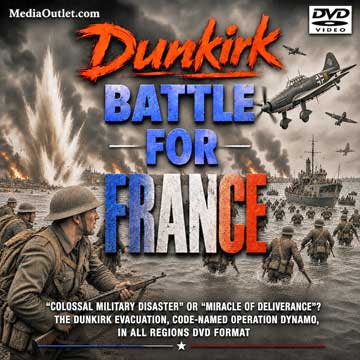
June 17, 1940: The European Civil War:
World War II: The Second European War (The European Theater Of
World War II): The German Invasion Of Western Europe (World War
II) (Sieg Im Westen [German: "Victory In The West"})
(The Manstein Plan, Fall Gelb [German: "Case Yellow",
Unternehmen Sichelschnitt, "Operation Sickle Cut"): The
Battle Of France (The Western Campaign [German: Westfeldzug], The
French Campaign [German: Frankreichfeldzug; French: Campagne De
France], The Fall Of France): Operation Aerial (Operation Ariel):
Maritime Incidents: Naval Maritime Incidents: The Sinking Of The
HMT Lancastria (The Sinking Of The RMS Lancastria): -- Britain's
worst single-ship maritime disaster occurs when between 3,000 and
5,800 are killed when the HMT Lancastria, the former British
Cunard liner RMS Lancastria before it was requisitioned by the
British covernment for service during World War II, is attacked
and sunk by the Luftwaffe near Saint-Nazaire, France during
Operation Ariel (Operation Aerial), the evacuation of Allied
forces and civilians from ports in western France from June 15-25,
1940 following the military collapse in the Battle Of France
against Nazi Germany. Having received an emergency order to
evacuate British nationals and troops in excess of its capacity of
1,300 passengers. The sinking of HMT Lancastria claimed more lives
than the combined losses of the RMS Titanic (1,517 passengers and
crew) and RMS Lusitania (1,198 passengers). On Sale @ 15% Off
Discount Till Midnight PT!
https://store.earthstation1.com/dunkirk-battle-for-france-dvd-war-files-series.html
Today's
EarthStation1.com 15% Off Commemorative Memorial Title: Frontiers
Of Flight Aviation History TV Series DVD, MP4, USB Drive
Today, June 17, 2026
June 17, 1943: #BOTD: #HBD! Burt Rutan,
American pilot, aerospace engineer and entrepreneur noted for his
originality in designing light, strong, unusual-looking, and
energy-efficient air and space craft, is #born Elbert Leander
Rutan in Estacada, Oregon. He designed the record-breaking
Voyager, which was the first plane to fly around the world without
stopping or refueling, and the sub-orbital spaceplane
SpaceShipOne, which won the Ansari X-Prize in 2004 for becoming
the first privately funded spacecraft to enter the realm of space
twice within a two-week period. With his VariEze and Long-EZ
designs, Rutan is responsible for popularizing canard
configurations and moldless composite construction for homebuilt
aircraft. On Sale @ 15% Off Discount Till Midnight PT!
https://store.earthstation1.com/frontiers-of-flight-aviation-history-tv-series-dvd-mp4-download-us4.html
Today's
EarthStation1.com 15% Off Commemorative Memorial Title: The
Vietnam War With Walter Cronkite DVD, Video Download, USB Drive
Today, June 17, 2026
June 17, 1963: The Aftermath Of World War
II: The Cold War: The Cold War In Asia: The Indochina Wars: The
Vietnam War (The Second Indochina War, The Vietnam Conflict, The
Resistance War Against America): The United States In The Vietnam
War: Protests In Vietnam: The Buddhist Crisis (Vietnamese: Bien Co
Phat Giao): -- A day after South Vietnamese President Ngo Dinh
Diem announced the Joint Communique to end the Buddhist crisis, a
riot involving around 2,000 people breaks out. The crowd were
confronted by police in spite of the agreement. One person is
killed. The Buddhist Crisis was a period of political and
religious tension in South Vietnam between May and November 1963,
characterized by a series of repressive acts by the South
Vietnamese government and a campaign of civil resistance, led
mainly by Buddhist monks. The Joint Communique was an agreement
signed on June 16, 1963 between the South Vietnamese government of
Ngo Dinh Diem and the Buddhist leadership during the Buddhist
crisis. The joint communique was presented to the press on June 16
and Buddhist leader Thich Tinh Khiet thanked Diem and exhorted the
Buddhist community to work with the government in what he
optimistically predicted would be a new era of religious harmony.
He expressed his "conviction that the joint communique will
inaugurate a new era and that ... no erroneous action from
whatever quarter will occur again." He declared that the
protest movement was over, and called on Buddhists to return to
their normal lives and pray for the success of the agreement. U.S.
Ambassador William Trueheart was skeptical about its
implementation, noting "If we find Diem in a mood to freeze
up, rather than move forward, then I think his days are numbered
and we must begin to make moves.". The Buddhist Crisis had
become a public relations issue for Diem beyond his country, with
speculation about a US-Diem rift being discussed in American
newspapers. The New York Times ran a front page headline on June
14, citing leaked government information that diplomats had
privately attacked Diem's handling of the crisis. It also reported
that General Paul Harkins, the head of the US advisory mission in
South Vietnam to order his men not to assist ARVN units that were
taking action against demonstrators. The US at the time considered
telling Vice President Tho that they would support him replacing
Diem as President. The communique was put in doubt by an incident
the following day outside the largest pagoda in the South
Vietnamese capital of Saigon, Xa Loi Pagoda, shortly after 9:00
a.m. A crowd of around 2,000 people were confronted by police, the
police having persisted in surrounding the pagoda in spite of the
Joint Communique agreement. A riot eventually broke out and police
attacked the crowd with tear gas, fire hoses, clubs and gunfire.
One protester was killed and scores more injured. Moderates from
both sides urged calm while some government officials blamed
"extremist elements". After more months of bitter
conflict, the Buddhist Crisis ended with a coup in November 1963
by the Army of the Republic of Vietnam, and the arrest and
assassination of President Ngo Dinh Diem on November 2, 1963. On
Sale @ 15% Off Discount Till Midnight PT!
https://store.earthstation1.com/the-vietnam-war-with-walter-cronkite-tv-series-3-dvd-se3.html
Today's
EarthStation1.com 15% Off Commemorative Memorial Title: The
Beatles Live In Melbourne Australia 1964 MP3 CD Audio Download
Today, June 17, 2026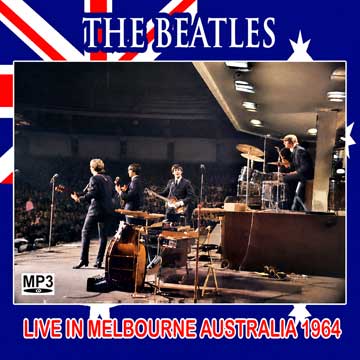
June 17, 1964: Aesthetics: Performing
Arts: Finales: Theatre Finales: Musical Finales: Australian
Musical Finales: The Beatles' 1964 World Tour: The Beatles'
Festival Hall Melbourne Finale: -- The Beatles complete the last
of their three performances at The Festival Hall in Melbourne,
Australia, just in time for Ringo Starr to rejoin the group after
being hospitalized with tonsillitis and temporarily replaced by
Jimmie Nicol. The Festival Hall (Melbourne) is a heritage listed
entertainment venue located at 300 Dudley Street, West Melbourne,
Victoria. It is one of Melbourne's larger concert venues and has
hosted a variety of local and international acts over many years.
Festival Hall first opened its doors in 1913 as a roller-skating
rink and later became a boxing arena. On October 25, 2020 Hillsong
Church announced they had purchased Festival Hall with the
intention to continue running the venue as a community
entertainment venue, as well as to use it for Hillsong Church
Services on Sundays. Stadium Pty Ltd was voluntarily liquidated
and formally wound up in July 2021. In March 2023, Live Nation
took over operations for the venue. On January 26 and 27, 2024
veteran punk band NOFX played their final Australian shows to a
sold-out crowd at Festival Hall, 30 years after their first
Australian tour. #Beatles #TheBeatles #FestivalHall
#FestivalHallMelbourne #Beatles1964WorldTour #BeatMusic
#BritishBeat #Merseybeat #BritishInvasion #BritishRock
#CapitalRecords #RockMusic #RockAndRoll #RockNRoll #MP3 #CD
#AudioDownload On Sale @ 15% Off Discount Till Midnight PT!
https://store.earthstation1.com/the-beatles-live-in-melbourne-australia-1964-m19643.html
Today's
EarthStation1.com 15% Off Commemorative Memorial Title: War And
Peace In The Nuclear Age TV Series DVD, Download, USB Drive
Today, June 17, 2026
June 17, 1967: The Aftermath Of World War
II: The Cold War: The Cold War (1962-1979): The Cold War In Asia:
Nuclear Warfare: Nuclear Weapons Testing: Chinese Nuclear Warfare:
Chinese Nuclear Weapons Testing: The Two Bombs, One Satellite
Program (Chinese: Liang Dan, Yi Xing): Test No. 6: -- China tests
its first hydrogen bomb. Test No. 6 is the codename for China's
first test of a three-staged thermonuclear device and, also its
sixth nuclear weapons test. It was a part of the "Two Bombs,
One Satellite" Program; Two Bombs refers to China's 1964 rist
atomic bomb test, their 1967 hydrogen bomb test, and the
intercontinental ballistic missile (ICBM) used to deliver them,
while One Satellite refers to their Dong Fang Hong I satellite
launched in 1970. Mao Zedong decided to begin a Chinese
nuclear-weapons program during the First Taiwan Strait Crisis of
1954-1955 over the Quemoy and Matsu Islands. While he did not
expect to be able to match the large American nuclear arsenal, Mao
believed that even a few bombs would increase China's diplomatic
credibility. Construction of uranium-enrichment plants in Baotou
and Lanzhou began in 1958, and a plutonium facility in Jiuquan and
the Lop Nur nuclear test site by 1960. The Soviet Union provided
assistance in the early Chinese program by sending advisers to
help in the facilities devoted to fissile material production, and
in October 1957 agreed to provide a prototype bomb, missiles, and
related technology. The Chinese, who preferred to import
technology and components to developing them within China,
exported uranium to the Soviet Union, and the Soviets sent two R-2
missiles in 1958. That year, however, Soviet leader Nikita
Khrushchev told Mao that he planned to discuss arms control with
the United States and Britain. China was already opposed to
Khrushchev's post-Stalin policy of "peaceful coexistence".
Although Soviet officials assured China that it was under the
Soviet nuclear umbrella, the disagreements widened the emerging
Sino-Soviet split. In June 1959 the two nations formally ended
their agreement on military and technology cooperation, and in
July 1960 all Soviet assistance with the Chinese nuclear program
was abruptly terminated and all Soviet technicians were withdrawn
from the program. The American government under John F. Kennedy
and Lyndon B. Johnson was concerned about the program and studied
ways to sabotage or attack it, perhaps with the aid of Taiwan or
the Soviet Union, but Khrushchev was not interested. The Chinese
conducted their first nuclear test, code-named 596, on 16 October
1964, and acknowledged that their program would have been
impossible to complete without the Soviet help. Its first fusion
weapon test was it's hydrogen bomb test of June 14, 1967. China's
last nuclear test was on July 29, 1996, then immediately
thereafter China signed the Comprehensive Test Ban Treaty (CTBT).
The number of nuclear warheads in China's arsenal is a state
secret. There are varying estimates of the size of China's
arsenal. China is estimated by the Federation of American
Scientists to have an arsenal of about 260 total warheads as of
2015, which would make it the second smallest nuclear arsenal
amongst the five nuclear weapon states acknowledged by the Treaty
on the Non-Proliferation of Nuclear Weapons. According to some
estimates, the country could "more than double" the
"number of warheads on missiles that could threaten the
United States by the mid-2020s". Early in 2011, China
published a defense white paper, which repeated its nuclear
policies of maintaining a minimum deterrent with a no-first-use
pledge. On Sale @ 15% Off Discount Till Midnight PT!
https://store.earthstation1.com/war-and-peace-in-the-nuclear-age-dvd-set-tv-series-7-disc7.html
Today's
EarthStation1.com 15% Off Commemorative Memorial Title: Rock &
Roll An Unruly History 10 Part TV Series MP4 Video Download DVD
Today, June 17, 2026
June 17, 1967: Counterculture Of The
1960s: The Hippie Movement: Counterculture Festivals: The Monterey
International Pop Festival: -- The three-day music festival held
June 16 to 18, 1967 in Monterey, California continues for its
second day at the Monterey County Fairgrounds. The festival is
remembered for the first major American appearances by the Jimi
Hendrix Experience, the Who and Ravi Shankar, the first
large-scale public performance of Janis Joplin, and the
introduction of Otis Redding to a mass American audience. The
festival embodied the theme of California as a focal point for the
counterculture and generally is regarded as one of the beginnings
of the "Summer of Love" in 1967 and the public debut of
the hippie, flower power and flower children movements and era.
Because Monterey was widely promoted and heavily attended,
featured historic performances, and was the subject of a popular
theatrical documentary film, it became an inspiration and a
template for future music festivals, including the Woodstock
Festival two years later. Rolling Stone publisher Jann Wenner said
"Monterey was the nexus - it sprang from what the Beatles
began, and from it sprang what followed"; the Beatles had
just released their landmark "Sgt. Pepper's Lonely Hearts
Club Band" album mere weeks before, and it as well as the
Monterey Pop Festival greatly influenced all popular music that
followed them. The second day of the Monterey Pop Festival, June
17, began on a Saturday afternoon, and continued late into
Saturday evening. Canned Heat started the Saturday afternoon show;
their set was deemed "uninspired" by Newsweek magazine's
reporter Michael Lydon. In a thrilling display of raw emotion,
Janis Joplin sang next, backed by Big Brother and the Holding
Company. Joplin's wildly elemental interpretation of the blues
standard "Ball and Chain" was described by Lydon as "the
blues big mama style, tough, raw, and gutsy, and with an aching
that few black singers reach." For the first time at Monterey
Pop, the audience rose to their feet. This Saturday set was not
recorded by filmmaker Pennebaker, so the group was asked to play
again on Sunday night. San Francisco Examiner music critic Phil
Elwood wrote that Joplin proved to be "the real queen of the
festival". This ended up being Joplin's breakout appearance,
bringing her fame far beyond the San Francisco Bay Area. Columbia
Records signed Big Brother and the Holding Company on the basis of
their performance at Monterey. Country Joe and the Fish came next,
delivering a funny performance with an anti-war message. Guitarist
and songwriter Barry Melton said afterward that he put political
messages in the band's music because "we feel that in this
society, you have to make your stance clear. Others don't want to
speak up in songs, be right up front." Melton said that
taking LSD was part of his "liberation", allowing him to
draw from many different musical genres. "When I hear a sound
that is groovy I use it. I try to find music all over the place.
Listening to anything can give you musical ideas. That's freedom,
and maybe that's psychedelic." Organist Al Kooper sang and
played two extended songs for a half hour, followed by the
Butterfield Blues Band who were appraised by Lydon as
reinvigorating the crowd with "precisely" interpreted
blues without being "uptight". One of Paul Butterfield's
standout harmonica solos was described as an exercise in
serialism, breaking a "few notes into tiny bits and
experiment with their regroupings." The next two bands were
dismissed by Lydon as forgettable sets: Quicksilver Messenger
Service and the Steve Miller Band. The final set of Saturday
afternoon was the Electric Flag, a band led by guitarist Mike
Bloomfield, containing Buddy Miles on drums, Barry Goldberg on
organ, and Nick Gravenites singing in front. Their act was hailed
as a "smash success" by Lydon. David Crosby announced
later that night that if anyone in the audience had failed to see
Electric Flag play, "man, you are out of it, so far out of
it." Moby Grape kicked off Saturday evening's concert with an
unmemorable performance, according to Lydon. Due to legal and
managerial disputes, the group was not included in the
Pennebaker-produced film. Some of the Moby Grape footage was shown
in 2007 as part of the 40th anniversary celebration of the film.
An outtake of Moby Grape's performance of "Hey Grandma"
appears on the bonus disc of the Criterion release of the film.
Regarding the decision for Moby Grape to open the evening,
guitarist Jerry Miller recalled that "everybody was arguing.
Nobody wanted to play first and I said that would be fine for me."
Moby Grape was followed by a "terrible" showing by South
African trumpeter Hugh Masekela, helped only by a spirited display
by Danny "Big Black" Rey on the congas. The Byrds sang
some hits and some new songs, but did not energize the crowd. The
band ended with a new single, "So You Want to Be a Rock 'n'
Roll Star", featuring Masekela on trumpet, reprising his
participation in the studio recording. A 20-year-old Laura Nyro
gave one of her earliest performances at the Monterey Pop
Festival. Lydon wrote that Nyro's "melodramatic" set,
"accompanied by two dancing girls who pranced absurdly",
was a disaster during which "the evening hit bottom".
Other critics wrote that the black-gowned Nyro was out of sync
with the psychedelic sensibilities of the event. Upon the
conclusion of her set, Nyro was upset, having heard booing from
the audience. While reviewing the raw footage in the 1990s,
Pennebaker picked out an audience member saying "beautiful",
and invited Nyro to witness it, but she died before this could be
arranged. With two huge singles behind them, San Francisco-based
Jefferson Airplane was one of the major attractions of the
festival, having built a large following on the West Coast. Lydon
wrote that the band "thoroughly proved themselves"
masters of psychedelia, aided by a trippy Headlights liquid light
show projected overhead, enticing hundreds to join the band on
stage dancing. Grace Slick "sang as if possessed" while
she swayed in a full-length blue robe. After this, Booker T. &
the M.G.'s played a handful of instrumental R & B tunes,
wearing brilliant lime green suits, then they were joined by an
identically attired Otis Redding who electrified the audience with
his sexually charged singing style. He sang his 1965 song
"Respect" which was topping the charts because of a
popular new interpretation by Aretha Franklin. Redding finished
with a riveting "Try a Little Tenderness". The crowd
responded by standing and screaming for more. Redding had been
included on the bill through the efforts of promoter Jerry Wexler,
who saw the festival as an opportunity to advance Redding's
career. Until that point, Redding had performed mainly for black
audiences, besides a few successful shows at the Whisky a Go Go.
Redding's show, received well by the audience ("there is
certainly more audible crowd participation in Redding's set than
in any of the others filmed by Pennebaker that weekend")
included a version of the Stones' "Satisfaction". The
festival would be one of his last major performances: Redding died
only six months later, in a plane crash, at the age of 26. On Sale
@ 15% Off Discount Till Midnight PT!
https://store.earthstation1.com/rock-amp-roll-an-unruly-history-10-part-tv-series-mp4-video-download-104.html
Today's
EarthStation1.com 15% Off Commemorative Memorial Title: Watergate:
The Secret Story With Mike Wallace DVD MP4 USB Flash Drive
Today, June 17, 2026
June 17, 1972: Scandals: Political
Scandals: Political Scandals Of The United States: Richard Nixon:
The Presidency Of Richard Nixon: The Watergate Scandal: Operation
Sandwedge: Operation Gemstone: The Watergate Break-In: --
Following a seemingly routine burglary, five men were arrested at
the National Democratic Headquarters in the Watergate complex in
Washington, DC: James W. McCord Jr., Virgilio Gonzalez, Frank A.
Sturgis, Eugenio R. Martinez and Bernard L. Barker. However,
subsequent investigations revealed the burglars were actually
agents hired by the Committee for the Re-election of President
Richard Nixon under their handlers E. Howard Hunt and G. Gordon
Liddy. A long chain of events then followed in which the president
and top aides became involved in an extensive coverup of this and
other White House sanctioned illegal activities, eventually
leading to the resignation of President Nixon on August 9, 1974.
The Watergate Break-In was part of Operation Sandwedge, a proposed
clandestine intelligence-gathering operation against the political
enemies of U.S. President Richard Nixon's administration. The
proposals were put together by Nixon's Chief of Staff H. R.
Haldeman, domestic affairs assistant John Ehrlichman and staffer
Jack Caulfield in 1971. Caulfield, a former police officer,
created a plan to target the Democratic Party and the anti-Vietnam
War movement, inspired by what he believed to be the Democratic
Party's employment of a private investigation firm. The operation
was planned to help Nixon's 1972 re-election campaign. Operation
Sandwedge included proposed surveillance of Nixon's enemies to
gather information on their financial status and sexual
activities, to be carried out through illegal black bag
operations. The operation would have targeted not only the
anti-Vietnam war movement and the political opposition, but rivals
within Nixon's own Republican Party as well. Control of Sandwedge
was passed to G. Gordon Liddy, who abandoned it in favor of a
strategy of his own devising, Operation Gemstone, which detailed a
plan to break into Democratic Party offices in the Watergate
complex. Liddy's plan eventually led to the downfall of Nixon's
presidency, which Caulfield believed would have been avoided had
Sandwedge been acted upon. Operation Gemstone was a proposed
series of clandestine or illegal acts, first outlined by G. Gordon
Liddy in two separate meetings with three other individuals:
then-Attorney General of the United States, John N. Mitchell,
then-White House Counsel John Dean, and Jeb Magruder, an ally and
former aide to H.R. Haldeman, as well as the temporary head of the
Committee to Re-elect the President, pending Mitchell's
resignation as Attorney General. The first meeting occurred in the
Attorney General's Washington, D.C., office at 11:00 a.m. on
January 27, 1972. Liddy described in great detail both his plan to
disrupt the upcoming Democratic National Convention in Miami
Beach, Florida, and his plan to prevent any disruption of the
upcoming Republican National Convention, then scheduled to take
place in San Diego, California. Liddy's proposals would cost
approximately 1M USD to carry out (Around 7M USD in 2022). Among
the various elements of Gemstone were plans to kidnap specific
"radical" leaders, and others who might cause trouble at
the Republican Convention, and hold them in Mexico until after the
convention was over. According to all four participants of the
January 27 meeting, Attorney General Mitchell declared, with some
evident sarcasm, "Gordon, that's not quite what I had in
mind." John Dean described his recollections of this meeting
to President Nixon on March 21, 1973, during the "Cancer on
the Presidency" conversation: "So I came over and Liddy
laid out a million dollar plan that was the most incredible thing
I have ever laid my eyes on: all in codes, and involved black bag
operations, kidnapping, providing prostitutes, uh, to weaken the
opposition, bugging, uh, mugging teams. It was just an incredible
thing." The second meeting occurred one week later, on
February 4, 1972, again at Mitchell's office. The participants of
this meeting were the same four men as the first, although John
Dean was not present for the entire meeting. Dean himself later
testified that he arrived "very late" to the meeting.
Liddy, Magruder, and Mitchell all disputed this claim. At the
February 4 meeting, Liddy proposed a scaled-down plan that would
cost 500K USD to enact (Around 3.5M USD in 2022). While less
ambitious than the January 27 agenda, "Operation Gemstone"
still involved several proposed criminal acts, most notably
including the use of wiretaps to eavesdrop on telephone
conversations involving Democratic party leaders. Beginning in
April 1973, as the Watergate scandal began to unravel, Magruder
and Dean both gave public and private testimony that was very
damaging to John Mitchell. For his part, Liddy remained silent
until the publication of his memoir Will in April 1980. However,
all four men have publicly stated that the February 4 meeting
adjourned without Mitchell having expressed any approval for any
of Liddy's plans. More specifically, all four participants have
publicly agreed that the break-in of the Democratic National
Committee's Watergate offices, generally considered the emblematic
crime of the Watergate scandal, did not come up in the meeting. On
Sale @ 15% Off Discount Till Midnight PT!
https://store.earthstation1.com/watergate-the-secret-story-with-mike-wallace-dvd-mp4-usb-flash-driv4.html
Today's
EarthStation1.com 15% Off Commemorative Memorial Title: We
Remember: The Space Shuttle Pioneers 1981-1986 DVD, Download, USB
Today, June 17, 2026
June 17, 1985: Rocket Launches: The
History Of Rocketry: The History Of Spaceflight: The Aftermath Of
World War II: The Cold War: The Space Age: The Space Race: Space
Programs Of The United States: Human Spaceflight Programs: The
Space Shuttle Program (The Space Transportation System (STS)):
STS-51-G: -- Space Shuttle Discovery launches from Pad A, Launch
Complex 39, Kennedy Space Center (KSC), at 7:33 am EDT. The
mission's crew members included Daniel C. Brandenstein, commander;
John O. Creighton, pilot; Shannon W. Lucid, Steven R. Nagel, and
John M. Fabian, mission specialists; and Patrick Baudry, of
France, and Prince Sultan Salman Al Saud, of Saudi Arabia, both
payload specialists. STS-51-G was the eighteenth flight of NASA's
Space Shuttle program, and the fifth flight of Space Shuttle
Discovery. The seven-day mission landed at Edwards Air Force Base,
California, on June 24. Sultan Salman Al Saud of Saudi Arabia was
on board as a payload specialist; Al Saud became the first Arab,
the first Muslim, and the first member of a royal family to fly
into space. It was also the first Space Shuttle mission which flew
without at least one astronaut from the pre-Shuttle era among its
crew. On Sale @ 15% Off Discount Till Midnight PT!
https://store.earthstation1.com/we-remember-the-space-shuttle-pioneers-198119811986.html
Today's
EarthStation1.com 15% Off Commemorative Memorial Title: Outer
Space Films 7 The Space Shuttle DVD, MP4 Download, USB Drive
Today, June 17, 2026
June 17, 1987: The History Of Rocketry:
The History Of Spaceflight: The Aftermath Of World War II: The
Cold War: The Space Age: The Space Race: Space Programs Of The
United States: Extinct Animals: Species Made Extinct By Human
Activities: Extinct Animals Of The United States: Extinct Birds:
Extinct Birds Of North America: The Dusky Seaside Sparrow
(Ammospiza Maritima Nigrescens): -- With the death of the last
individual of the species, the Dusky Seaside Sparrow becomes
extinct. The dusky seaside sparrow, Ammodramus maritimus
nigrescens, was a non-migratory subspecies of the seaside sparrow,
found in Florida in the natural salt marshes of Merritt Island and
along the St. Johns River. The subspecies was officially declared
extinct in December 1990. When Merritt Island was flooded with the
goal of reducing the mosquito population around the Kennedy Space
Center, the sparrows' nesting grounds were devastated, and their
numbers plummeted. Later, the marshes surrounding the river were
drained to facilitate highway construction; this was a further
blow. Eventually, pollution and pesticides took such a high toll
that by 1979, only six dusky seaside sparrows were known to exist
- all of whom were males; a female was last sighted in 1975. On
Sale @ 15% Off Discount Till Midnight PT!
https://store.earthstation1.com/outer-space-films-7-the-space-shuttle-dv7.html
Today's
EarthStation1.com #OnThisDay Commemorative Memorial Title: Jean
Shepherd Radio Shows All Known To Exist DVD, MP3 Download, USB
Today, June 17, 2026 June 17: World Croc Day: -- Highlights
the plight of endangered crocodiles. The day also encourages
learning more about these amazing reptiles. Crocodiles are easily
confused with alligators. There are some differences between the
two, however. The primary difference is the shape of their snout.
The crocodile's snout forms a long, pointed V-like shape.
Alligators' snouts, on the other hand, are more rounded and
u-shaped. In addition, crocodiles are usually much larger than
alligators. The average alligator weighs about 500 pounds.
Crocodiles can reach up to 2,200 pounds! This reptile is also much
more aggressive than alligators, which makes them more dangerous.
Crocodiles can be found in nearly every corner of the world. These
reptiles are native to both the North and South American
continents. They are also found in Africa, Australia, and Asia,
but the Florida Everglades is the only place in the world where
crocodiles and alligators live together. Of all the animals in the
world, the crocodile's bite is the strongest. There are 15
different species of crocodiles. Crocodiles can live in both
freshwater and saltwater. They eat fish, birds, and other animals.
Crocodiles can live to be 100, with the oldest crocodile in the
world reaching 140. There is a concern that some species of
reptiles are on their way to extinction. Human activity is the
primary reason for this. Hunting, pollution, and destroyed
habitats are a few reasons crocodiles are endangered. The
Crocodile Research Council, in conjunction with the Belize Zoo,
created World Croc Day. The first global event was held on June
17th, 2017.
https://store.earthstation1.com/complete-jean-shepherd-radio-and-lp-collection-mp3-dvds-2-dis32.html
June 17: World Croc Day: -- Highlights
the plight of endangered crocodiles. The day also encourages
learning more about these amazing reptiles. Crocodiles are easily
confused with alligators. There are some differences between the
two, however. The primary difference is the shape of their snout.
The crocodile's snout forms a long, pointed V-like shape.
Alligators' snouts, on the other hand, are more rounded and
u-shaped. In addition, crocodiles are usually much larger than
alligators. The average alligator weighs about 500 pounds.
Crocodiles can reach up to 2,200 pounds! This reptile is also much
more aggressive than alligators, which makes them more dangerous.
Crocodiles can be found in nearly every corner of the world. These
reptiles are native to both the North and South American
continents. They are also found in Africa, Australia, and Asia,
but the Florida Everglades is the only place in the world where
crocodiles and alligators live together. Of all the animals in the
world, the crocodile's bite is the strongest. There are 15
different species of crocodiles. Crocodiles can live in both
freshwater and saltwater. They eat fish, birds, and other animals.
Crocodiles can live to be 100, with the oldest crocodile in the
world reaching 140. There is a concern that some species of
reptiles are on their way to extinction. Human activity is the
primary reason for this. Hunting, pollution, and destroyed
habitats are a few reasons crocodiles are endangered. The
Crocodile Research Council, in conjunction with the Belize Zoo,
created World Croc Day. The first global event was held on June
17th, 2017.
https://store.earthstation1.com/complete-jean-shepherd-radio-and-lp-collection-mp3-dvds-2-dis32.html
Today's
EarthStation1.com #OnThisDay Commemorative Memorial Title: Subways
Trains & Railroads! Rail Transport History DVD, Download, USB
Today, June 17, 2026June 17: National Dump The Pump Day: --
Encourages commuters to forego their cars by using public
transportation. The day aims to allow people to save time and
money on gas. Moreover, the day also spreads awareness about the
depleting fossil fuel resources. Factors like population growth,
urbanization, globalization, and the increased demand/supply issue
have led humans to use fossil fuels without thinking about future
repercussions. This domino effect has further led to the increase
in environmental pollution as well as air-borne diseases. National
Dump the Pump Day motivates people to think about the future by
using public transport for not just one day, but the days to come.
The National Dump the Pump Day was honored for the first time in
2006 by the American Public Transportation Association (APTA). The
day is celebrated each year on the third Thursday of June, and
this year, the day falls on June 17. APTA was created in 1882 in
Massachusetts, Boston as the American Street Railway Association
as its initial focus was on the railway system of the country.
However, in 2000, the association merged with the Institute of
Rapid Transit, becoming APTA instantly. The nonprofit organization
is the only North American organization that represents all public
transportation systems. APTA currently consists of more than 1500
public and private transportation sectors. You can commemorate the
day by riding public transport, just like APTA's slogan for the
day goes, "Dump the Pump. Ride Transit." One study shows
that spending one dollar on public transport returns four dollars
to the country's economy. If your household owns more than one
car, you can choose to ride together to save up to ten thousand
dollars in gas money and gas taxes every year. As the years have
progressed, car technology has improved immensely, and today, we
have hybrid and electric cars that have either reduced gas usage
or completely taken gas out of the picture. Such inventions are
great news not only for the economy but also for the environment.
Billions have already been spent on the fossil fuel industry, from
the discovery of fossil fuel resources to building fossil fuel
extraction plants and sustaining them. In all this scenario, the
environment takes a hit for the worse because of pollution. Many
species are on the verge of extinction. Furthermore, humans have
had to pay the price because of the increase in diseases due to
pollution. For instance, millions worldwide die due to a disease
they wouldn't have suffered from had pollution levels been lower.
https://store.earthstation1.com/subways-trains-and-railroads-locomotive-films-2-dual-layer-dvd2.html
Today's
EarthStation1.com #OnThisDay Commemorative Memorial Title: World
War II: The War Years 17 Part TV Series MP4 Video Download DVD
Today, June 17, 2026June 17: Icelandic National Day (Iceland
Independence Day): -- World War II: June 17, 1944: Iceland
declares independence from Denmark and becomes a sovereign
republic, with Sveinn Bjornsson as the country's first president.
Iceland had centuries-old ties ties with Denmark for centuries,
and that came to an end on the birthday of Jon Sigurdsson (June
17, 1811 - December 7, 1879), a major figure of Icelandic culture
leader of the 19th century Icelandic independence movement. The
formation of the republic was based on a clause in the December 1,
1918 Danish-Icelandic Act Of Union. The act declared Iceland to be
a sovereign state separate from Denmark, but maintained the two
countries in a personal union, with the King of Denmark also being
the King of Iceland. A significant clause in the act allowed for
the act's revision in 1943. German occupation of Denmark during
1943 meant that the revision of the act could not take place.
However, the 1944 Icelandic Constitutional Referendum plebiscite,
held May 20-23, 1944, overwhelmingly approved the abolition of the
monarchy and Icelandic independence. At the time, the US Military
had taken over the defence of Iceland at Iceland's invitation,
after being forcibly occupied by Britain in 1940. Although
saddened by the results of the plebiscite, King Christian X sent a
letter on June 17, 1944 congratulating Icelanders on the
establishment of their republic. Abolishing the monarchy resulted
in little change to the Icelandic constitution; instances of "The
King" were simply changed to "The President". To
mark Independence Day, bells ring in harmony across the capital
city of Reykjavik. The day serves as a reminder of the sacrifices
made by the country's past heroes to ensure freedom for future
generations. It is an occasion marked by great joy and national
pride. People paint the national flag on their faces and
participate in the parade. Music has a great significance, and
there are always musical shows on the day.
https://store.earthstation1.com/world-war-ii-the-war-years-17-part-tv-series-mp4-video-download-174.html
Today's
EarthStation1.com #OnThisDay Commemorative Memorial Title: Red
Ball Express 1952 Jeff Chandler Sidney Poitier DVD, MP4, USB Drive
Today, June 17, 2026June 17, 1961: #DOTD: #RIP: Jeff
Chandler, American actor of stage, film and television, film
producer, and singer, best remembered for playing Cochise in
Broken Arrow (1950), for which he was nominated for the Academy
Award for Best Supporting Actor, one of Universal Pictures' more
popular male stars of the 1950s (b. December 15, 1918) #dies of a
blood infection complicated by pneumonia in Culver City,
California, aged 42. While working on Merrill's Marauders in the
Philippines, Chandler injured his back on on April 15, 1961
playing baseball with U.S. Army Special Forces soldiers who served
as extras in the film. He had injections to deaden the pain and
enable him to finish the production. On May 13, 1961, he entered a
hospital in Culver City, California, and had surgery for a spinal
disc herniation. Severe complications arose; an artery was
damaged, and Chandler hemorrhaged. On May 17, in a
seven-and-a-half-hour emergency operation following the original
surgery, he was given 55 pints of blood. A third operation
followed on May 27, in which he received an additional 20 pints of
blood. Tony Curtis and Gerald Mohr were among the pallbearers at
Chandler's funeral, attended by more than 1,500 people. He is
buried at Hillside Memorial Park Cemetery in Culver City. An
investigation ensued into Chandler's death. It was deemed
malpractice, and resulted in his children suing the hospital for
1.5M USD. Chandler's own estate was worth 600K USD, which he left
to his daughters. His ex-wife sued his estate for 80K USD for
money owed under their divorce settlement. For his contribution to
the motion picture industry, Chandler has a star on the Hollywood
Walk of Fame, at 1770 Vine Street. Jeff Chandler was born Ira
Grossel to a Jewish family in Brooklyn. He attended Erasmus Hall
High School, the alma mater of many stage and film personalities,
where he acted in school plays; his schoolmates included Susan
Hayward. Among his many credits include Sword in the Desert
(1948), Deported (1950), Female on the Beach (1955), and Away All
Boats (1956). In addition to his acting in film, he is known for
his role as Phillip Boynton in the radio program Our Miss Brooks
starring Eve Arden as her fellow teacher and the clueless object
of her affection, and for his musical recordings.
https://store.earthstation1.com/red-ball-express-dvd-1952-jeff-chandler-sidney-poi1952.html
Today's
EarthStation1.com #OnThisDay Commemorative Memorial Title: The
Missiles Of October (1974) Cuban Missile Crisis DVD, MP4, USB
Today, June 17, 2026June 17, 1904: #BOTD: #HBD! Ralph
Bellamy, American actor whose career spanned 62 years on stage,
film, radio and television (d. November 29, 1991) is #born Ralph
Rexford Bellamy in Chicago, Illinois. He played leading roles as
well as supporting roles, garnering acclaim and awards, including
an Tony Award for Best Dramatic Actor in Sunrise at Campobello and
Oscar nomination for Best Supporting Actor for The Awful Truth
(1937). Ralph Bellamy died from a lung ailment at Saint John's
Health Center in Santa Monica, California at the age of 87, and
was buried in Forest Lawn - Hollywood Hills Cemetery in Los
Angeles.
https://store.earthstation1.com/the-missiles-of-october-1974-cuban-missile-crisis-docud1974.html
Today's
EarthStation1.com #OnThisDay Commemorative Memorial Title: Winston
Churchill: The Valiant Years TV Series DVD, MP4, USB Drive
Today, June 17, 2026June 17, 1941: The European Civil War:
World War II: The Second European War (The European Theater Of
World War II): The North African Campaign: The Western Desert
Campaign (The Desert War): Operation Battleaxe (June 15-17, 1941):
-- The British Army's 11th Hussars assault and take Fort Capuzzo
in Libya, Africa from Italian forces, only to have to immediately
relinquish it. Fort Capuzzo (Ridotta Capuzzo) was a fort in the
colony of Italian Libya, near the Libyan-Egyptian border and next
to the Italian Frontier Wire, a 271 km (168 mi) barbed wire fence
with fortifications in Italian Libya along the length of the
border of British-held Egypt. The Litoranea Balbo (Via Balbia, now
called the Libyan Coastal Highway) ran south from Bardia to Fort
Capuzzo, 13 km (8 mi) inland, west of Sollum, then east across the
Egyptian frontier, to the port over the coastal escarpment. The
fort was built during Italian colonial repression of Senussi
resistance in the Second Italo-Senussi War (a prolonged conflict
in Italian Libya between Italian military forces and indigenous
rebels associated with the Senussi Order that lasted from 1923
until 1932 when the principal Senussi leader, Omar Mukhtar, was
captured and executed), as part of a barrier on the Libya-Egypt
and Libya-Sudan borders. The Frontier Wire and a series of forts
including Fort Capuzzo were used to stop the Senussi from moving
freely across the border. The fort had four crenellated walls
(walls with rectangular indentations on their tops to serve as
battlements) enclosing a yard. Living quarters had been built
around the edges and provided the base for border guards and
Italian army armoured car patrols. A track ran south from the
fort, just west of the frontier wire and the border, to Sidi Omar,
Fort Maddalena and Giarabub. The fort changed hands several times
during the Western Desert Campaign (1940-1943) of the Second World
War. On the afternoon of 15 June, the 7th Royal Tank Regiment (7th
RTR) attacked Fort Capuzzo during Operation Battleaxe (a British
Army operation to clear eastern Cyrenaica of German and Italian
forces and raise the Siege of Tobruk (15-17 June)) and scattered
the defenders. The British tanks broke through but infantry were
slow to follow up and the tanks were not able rapidly to exploit
the success. Next day, the 22nd Guards Brigade consolidated at the
fort and Panzer Regiment 8 attacked near Capuzzo, only to be
repulsed by the 4th Armoured Brigade. German attempts to work
round the British flank failed but reduced the tank regiments in
the area to 21 runners. On June 17, the danger of encirclement
increased as German attacks reached Sidi Suleiman and the 22nd
Guards Brigade was ordered to retreat at 11:00 a.m. The remnants
of the armoured brigades covered the British withdrawal,
eventually to the start line, assisted by air cover from the RAF.
https://store.earthstation1.com/winston-churchill-the-valiant-years-dvd-set-all-26-shows-7-d267.html
Today's
EarthStation1.com #OnThisDay Commemorative Memorial Title: Legacy
With Michael Wood World History TV Series DVD, MP4, USB Stick
Today, June 17, 2026June 17, 1631: #DOTD: #RIP: Mumtaz Mahal,
beautiful and brilliant Empress consort of the Mughal Empire from
January 19, 1628 until her death, chief consort of the Mughal
emperor Shah Jahan, inspiration for the Taj Mahal built as her
mausoleum and ultimately of her beloved Shah Jahan himself (b.
April 27, 1593) #dies during the birth of her 14th child, daughter
Gauhar Ara Begum, in Burhanpur, Deccan (present-day Madhya
Pradesh), during the birth of her fourteenth child, a daughter
named Gauhar Ara Begum. Her husband, Mughal emperor Shah Jahan I,
will spend the next 17 years building her mausoleum, the Taj Mahal
in Agra, which is considered to be a monument of undying love,
often cited as one of the Wonders of the World. As with other
Mughal royal ladies, we have no contemporary likenesses that are
accepted as of her, but numerous imagined portraits were created
from the 19th century onwards. Mumtaz Mahal was born Arjumand Banu
Begum in Agra, the daughter of Abu'l-Hasan Asaf Khan, a wealthy
Persian noble who held high office in the Mughal Empire, and the
niece of Empress Nur Jahan, the chief wife of Emperor Jahangir and
the power behind the emperor. She was married at the age of 19 on
April 30, 1612 to Prince Khurram, later known by his regnal name
Shah Jahan, who conferred upon her the title "Mumtaz Mahal"
(Persian: the exalted one of the palace). Although betrothed to
Shah Jahan since 1607, she ultimately became his second wife in
1612. Mumtaz and her husband had fourteen children, including
Jahanara Begum (Shah Jahan's favourite daughter), and the Crown
prince Dara Shikoh, the heir-apparent, anointed by his father, who
temporarily succeeded him, until deposed by Mumtaz Mahal's sixth
child, Aurangzeb, who ultimately succeeded his father as the sixth
Mughal emperor in 1658.
https://store.earthstation1.com/legacy-with-michael-wood-world-history-tv-series-dvd-mp4-us4.html
Today's
EarthStation1.com #OnThisDay Commemorative Memorial Title: Don
Knotts On Hollywood Palace TV Show DVD, Video Download, USB Drive
Today, June 17, 2026June 17, 2008: #DOTD: #RIP: Cyd Charisse,
American actress, dancer and beauty (b. March 8, 1922) #dies of a
heart attack at age 86 at Cedars-Sinai Medical Center in Los
Angeles, California. She is buried at Hillside Memorial Park in
Culver City, California. Born Tula Ellice Finklea in Amarillo,
Texas, she recovered from polio as a child and studied ballet,
Charisse entered films in the 1940s. Her roles usually featured
her abilities as a dancer, and she was paired with Fred Astaire
and Gene Kelly; her films include Singin' in the Rain (1952), The
Band Wagon (1953), Brigadoon with Gene Kelly and Van Johnson
(1954) and Silk Stockings (1957). She stopped dancing in films in
the late 1950s, but continued acting in film and television, and
in 1992 made her Broadway debut. In her later years, she discussed
the history of the Hollywood musical in documentaries, and was
featured in That's Entertainment! III in 1994. She was awarded the
National Medal of the Arts and Humanities in 2006.
https://store.earthstation1.com/don-knotts-on-hollywood-palace-dvd-bobby-vinton-syd-charisse.html